From the Factory Floor to the Wind Turbines: WindAc Africa 2026 Explores South Africa’s Wind Energy Future
By: Sonwabile Luthango – Intern | Saldanha Bay
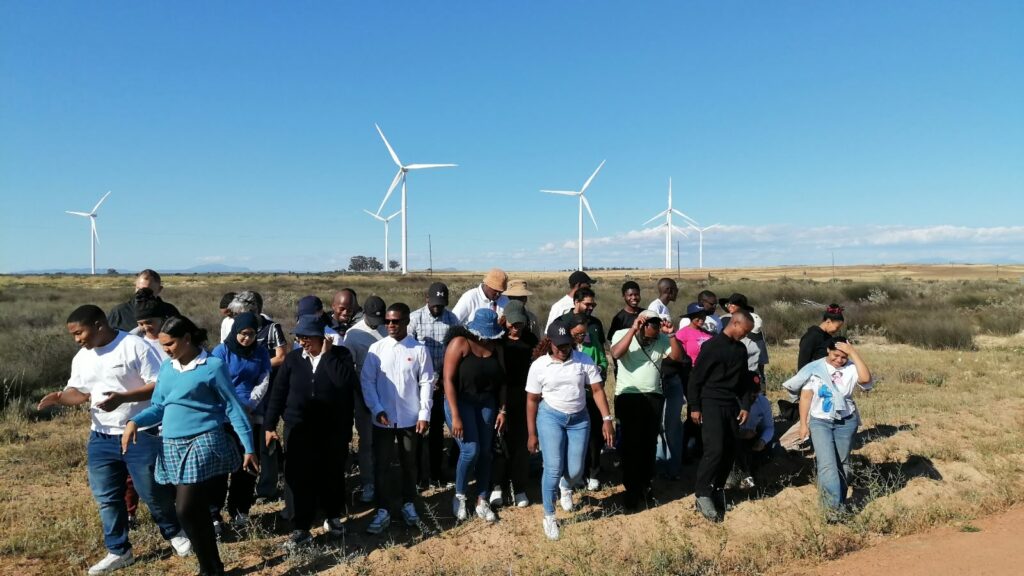
On, Monday, 5 October, Dizindaba experienced Day 0 of WindAc Africa 2026, an academic conference hosted by the South African Wind Energy Association (SAWEA), through a site visit that took participants beyond the conference room and into the heart of the wind energy industry.
The site visit brought together people from different backgrounds, including journalists, researchers, teachers, school learners and university students, many of whom are interested in engineering, renewable energy and the broader energy sector.
For Dizindaba, the visit provided an opportunity to see what the industry looks like beyond presentations and statistics.
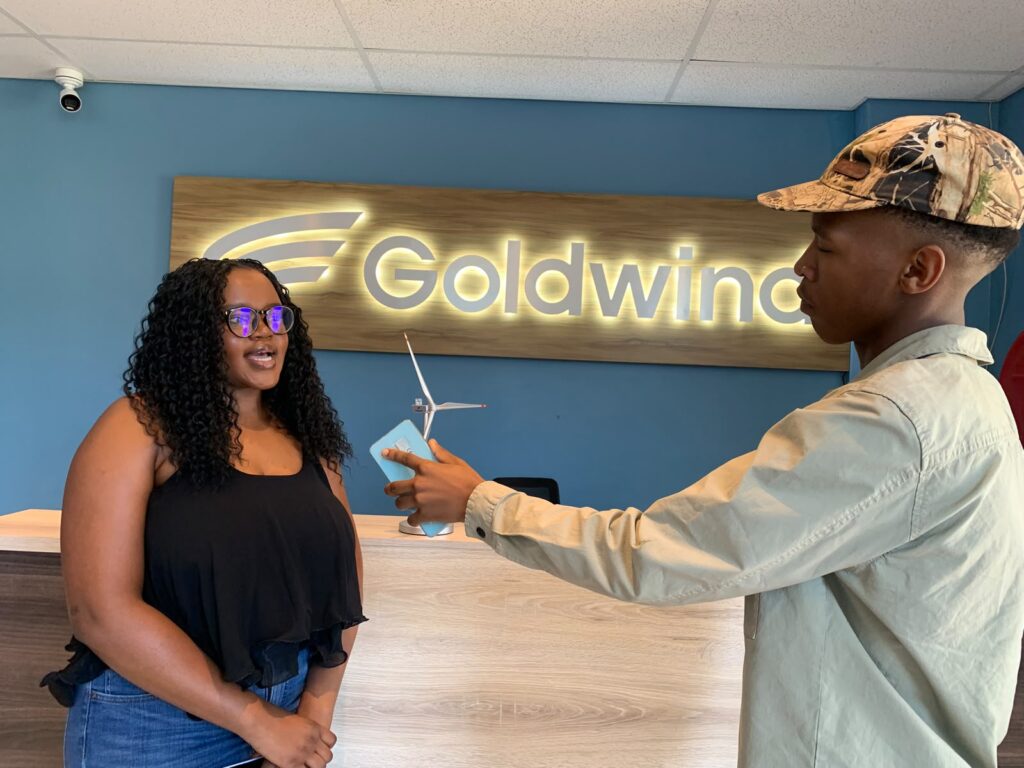
The day started at the Goldwind Solutions factory, where participants were taken through the facility and introduced to the business and its role in the wind energy sector.
Visitors were shown around the factory while representatives explained more about wind turbines, how the technology works and some of the work taking place across the industry.
A question-and-answer session also gave visitors an opportunity to engage directly with people working in the sector.
What stood out was that the visit was not only about showcasing technology. It was also about highlighting the people and skills behind that technology.
This is important because one of the objectives of WindAc Africa is to create stronger links between young people and the wind energy industry.
That link became even clearer as the group moved from the factory to the next stop.
FROM THE FACTORY TO THE WIND FARM

After leaving Goldwind Solutions, the group travelled to the Umoya Energy Wind Farm near Hopefield in the Western Cape.
This was where the scale of the industry became particularly visible.
At the wind farm, participants had the opportunity to see the turbines up close and learn more about how the facility operates.
Umoya Energy Wind Farm consists of 37 Vestas V100 wind turbines, each with a hub height of about 95 metres, and has an installed capacity of 66.6MW. The wind farm began supplying electricity to the grid in late 2013 and reached commercial operation in February 2014.
Standing next to one of these turbines provides a different understanding of renewable energy.
From a distance, a turbine may simply appear as a structure turning in the background. Up close, the size of the infrastructure becomes clear, as does the engineering required to generate electricity from moving wind.
Participants were taken through the wind farm and given more information about the turbines, the electricity they generate and the role wind energy plays in South Africa’s energy mix.
According to the wind farm, the Umoya facility generates approximately 176,600 MWh of clean renewable electricity each year. It also forms part of South Africa’s first round of the Renewable Energy Independent Power Producer Procurement Programme.
BUT THE BIGGER PICTURE IS THE PEOPLE
For Dizindaba, one of the most significant aspects of the day was seeing the different groups brought together in one space.
There were researchers examining the industry from an academic perspective, teachers, school learners still considering their future fields of study, and university students interested in electrical and mechanical engineering, renewable energy and the wider energy sector.
There were also journalists, including Dizindaba, seeking to understand the industry well enough to tell these stories to communities beyond the sector.
This is where initiatives such as SAWEA’s wind internship programme become important.
The industry cannot grow simply by building more wind farms. It also needs young people who understand the technology, can work on projects, conduct research, develop new solutions and eventually become part of the workforce driving the sector forward.
For a learner standing next to a wind turbine, the possibility of becoming an engineer working in renewable energy can suddenly feel much more real.
Instead of only reading about wind energy in a textbook, learners can see the infrastructure, speak to people working in the sector and ask questions about what it takes to enter the industry.
A DIFFERENT START TO WINDAC AFRICA 2026
The site visit served as an introduction to WindAc Africa 2026 before the main academic conference gets underway at the Cape Town International Convention Centre (CTICC).
SAWEA describes WindAc Africa as an academic platform, with the 2026 conference taking place on 6 and 7 October at the CTICC.
But Day 0 offered something different.
It provided participants with an opportunity to step outside the conference environment and physically experience the industry they would be discussing.
From the factory floor at Goldwind Solutions to standing beneath the giant turbines at Umoya Energy Wind Farm, the day was a reminder that the transition to renewable energy is not only about technology.
It is also about people, skills, education and creating opportunities for the next generation to enter the industry.
Perhaps that is one of the most important conversations WindAc Africa can contribute to—not only where South Africa’s wind energy sector is today, but also who will help build and power its future.