From Klapmuts to the UN: Human Rights Concerns
By: Dizindaba Staff Reporter | 06 October 2026 | Klapmuts
Put Protection and Accountability in Focus

Klapmuts has seen growing community concern over youth violence and gang-related crime.
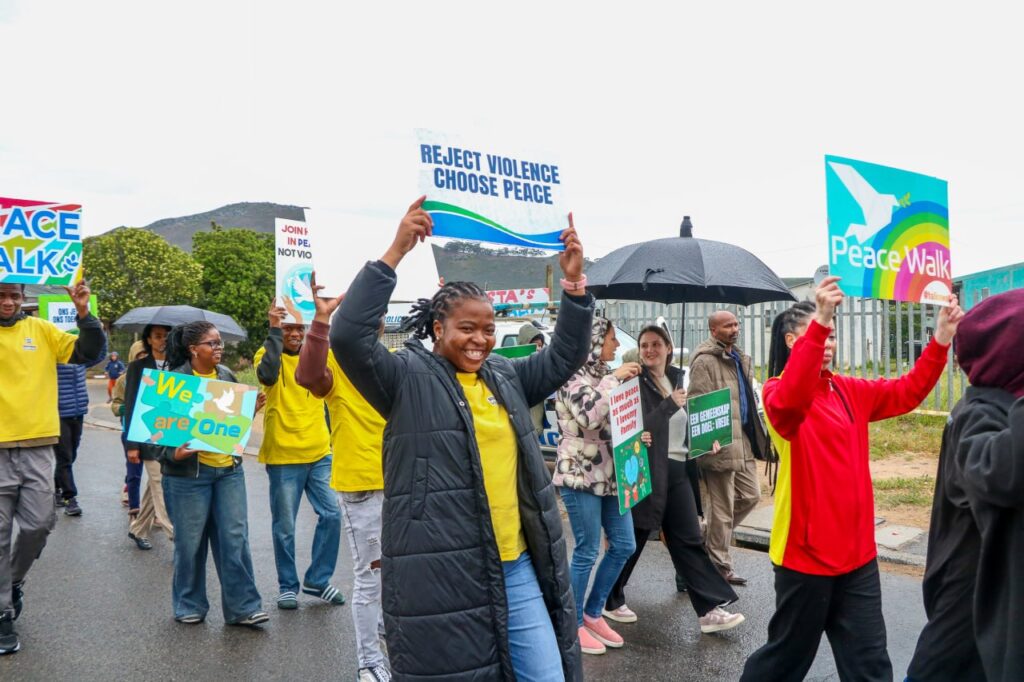
Late last month, community leaders, young people, faith representatives and the police took part in
a Youth March for Peace, calling for stronger cooperation, youth support and long-term
solutions.
The initiative followed the shooting of a 16-year-old girl in a gang-related incident and brought
together local stakeholders, including SAPS, youth organisations, Shincheonji volunteers and
the Southern African Leaders Coalition for Faith, Freedom and Justice (SALC-FFJ). Speakers
emphasised that addressing violence requires more than policing, with youth development,
positive role models, faith communities and sustained community cooperation also needed.
Beyond the immediate issue of crime, the incident raises fundamental human rights concerns.
The right to life and the right to security of the person are among the basic protections that
communities and institutions have a responsibility to uphold. When violence threatens the lives
and safety of young people, it raises questions about how effectively those protections are being
upheld and what measures are being taken to prevent further harm.
These concerns at community level connect to wider international discussions about the
protection of fundamental rights and the responsibility of institutions to uphold them. At the 63rd
session of the United Nations Human Rights Council, concerns were raised over the pretrial
detention and treatment of 95-year-old Chairman Lee Man-hee in the Republic of Korea.
While the Klapmuts march and Chairman Lee’s case are distinct and arise from very different
circumstances, they involve different aspects of the broader human rights framework: in
Klapmuts, concerns centre on the protection of life and personal security; in Chairman Lee’s
case, concerns include humane treatment in detention, fair trial guarantees and freedom of
religion or belief. Together, they highlight the importance of ensuring that human rights
protections are upheld in practice and that institutions respond appropriately when those rights
are at risk.
An oral statement was delivered on 18 September by CAP Liberté de Conscience (CAP
Freedom of Conscience), an NGO with UN ECOSOC consultative status, during the Council’s
General Debate under Item 3 on the promotion and protection of human rights.
The statement highlights international protections concerning freedom of religion or belief,
humane treatment in detention, fair trial guarantees and the use of pretrial detention as a
measure of last resort.
CAP Freedom of Conscience is calling on the Republic of Korea to consider alternatives to
detention, provide an independent medical assessment, ensure appropriate detention
conditions and guarantee a fair and impartial trial.
The organisation said the case highlights wider international concerns about the treatment of
elderly detainees, protection of religious minorities and respect for fundamental human rights.
About CAP Liberté de Conscience
CAP Liberté de Conscience is a secular European NGO with United Nations consultative status,
established in 1995 to promote and protect freedom of religion and belief and combat
discrimination based on religion or belief.